UDPATE 7/16/13: New images.
11/22/12: I updated some images, dug deeper on narratives around Eisner, Iger, and Ashman, added Bruckheimer as the current #4 contributor, and updated the notes about the Pixar crew.
12/7/10: I added some notes about the rest of the Pixar crew at the end. Lasseter couldn't have done it without them. We also added Tangled and other newer stuff.
1/15/10: Originally posted.
=====================
I've been reading "DisneyWar." If you haven't read it, go read it. Even if you speed read through all the parts that don't deal with animation, it's still worth it. It tells the story of Michael Eisner and Roy Disney almost like you're reading a novel (but it does get slightly boring at times later in the book because new executives and products come in and out of Eisner and Roy's lives).

So who made Disney successful in the late 80s?
Hard to tell, really. You'll have to read this long story to get to the answer at the bottom (it will be worth it, so don't cheat).
Roy Disney Jr. hired Michael Eisner as the Disney CEO (who was successful at Paramount and ABC) and Wells as President. Then Eisner hired Jeffrey Katzenberg (who he promoted at Paramount, and who was a hard, efficient worker) as the head of all Disney films.
Jeffrey Katzenberg:

As soon as Eisner and Katzenberg were in charge at Disney, they wanted to shut down the entire animation department. Why? Because (1) they had no experience with animation (they wanted to concentrate on the live-action films), (2) animations hadn't been successful or valuable since Walt's death, and (3) they didn't think they could do Walt's memory justice if they kept making bad animations.
Roy Disney:

There was one thing that saved Walt Disney animation: Roy Disney, Walt's nephew and the son of Walt's business partner, Roy Disney Sr. (Walt and Roy Sr. were actually 50/50 business partners; Roy Sr. ran the business and Walt ran the creative side. We only hear about Walt because he was the face of the company.)
Eisner put Katzenberg in charge of all the film studios (including animation), while Roy was head of animation. So it was hard at first, they (led by Katzenberg, but supported by Roy) tried to cut out all the dark parts of The Black Cauldron. Of course, it was all dark, so they had to settle.

Then Eisner and Katzenberg pushed to make the animated films cheaper and faster.
That fell on new directors Ron Clements and John Musker. This is what wikipedia says about Ron Clements:
Clements began his career as an animator for Hanna-Barbera... After that, he served a two year apprenticeship with famed animator Frank Thomas, [one of the most famous Disney animators], [as] a supervising animator in classic Disney films such as Peter Pan (1953), Lady and the Tramp (1955) and The Aristocats (1970).
Clements made his feature debut as a character animator on The Rescuers (1977) and Pete's Dragon (1977). In 1981, he became the supervising animator on The Fox and the Hound. Future partner John Musker worked as a character animator under him. Clements later teamed up with Musker as story artists on the ambitious animated flop The Black Cauldron (1985).
So Ron had made a short about "Basil of Baker Street," a 1958 children's book that spawned a series of books. He then pitched it as a film. When Eisner and Katzenberg came on board, Clements and Musker were putting the film together (The Great Mouse Detective).

1. The Great Mouse Detective - So they wanted it faster and cheaper. The result was a low-quality animated film that left Clements, Musker, and Roy frustrated. However, it actually turned a profit, so Katzenberg and Eisner weren't going to shut down animation. They actually realized that they might need to go with the higher quality instead.
Here is where Eisner comes in. Michael Eisner (the new Disney Chairman and CEO) gets everybody together to throw out some ideas. A young animator, Jim Cox, threw down the idea of "Oliver Twist with dogs." Katzenberg loved it because he had been trying to a live action Oliver Twist, and so he pretty much claimed the idea as his own, even though the idea came from Jim Cox (who wrote the film and went on to write for Rescuers 2 & Ferngully).
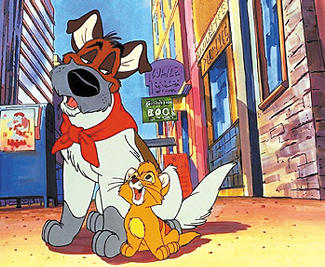
2. Oliver and Company - Also of note is that James Mangold was also a writer on the Oliver Twist film, which was named "Oliver & Company." Katzenberg wanted it to be a broadway musical, which is why it ended up with so many popular names doing the songs and voices (very unlike Disney of the past).
(James Mangold was frustrated from the Disney experience. Oliver & Company was the first movie he wrote for. So after the film he went back to film school for his Masters, and came out as an acclaimed live-action director and writer, having gone on to direct Cop Land, Girl Interrupted, Kate & Leopold, Walk the Line, 3:10 to Yuma, and Knight and Day.)
So Disney put a little more time and money into Oliver & Company. It was a success. It eventually made $73 million in the US, which was a lot back then, making it the #1 Disney animated film in quite awhile. So Disney was willing to back animations.
Now back to that Eisner pitch meeting. Another idea was thrown down. This idea was from Ron Clements: The Little Mermaid. A classic Disney fairytale, where they made the ending happy, just like Walt always did (for example, the step sisters don't cut off their toes in Cinderella).
At first, Eisner and Katzenberg hated the idea (they bonged it, which means they did thumbs down and declared it a horrible idea). They thought it was too similar to Splash (a live action Disney hit under the Touchstone Pictures brand that was made before Eisner and Katzenberg got there).
However, Roy loved the idea and Katzenberg warmed up on it. By the time they were ready to make it (Roy and Ron Clements kept pushing it on Katzenberg after Oliver & Company was in development), Splash was long forgotten so Eisner no longer had a problem with it.
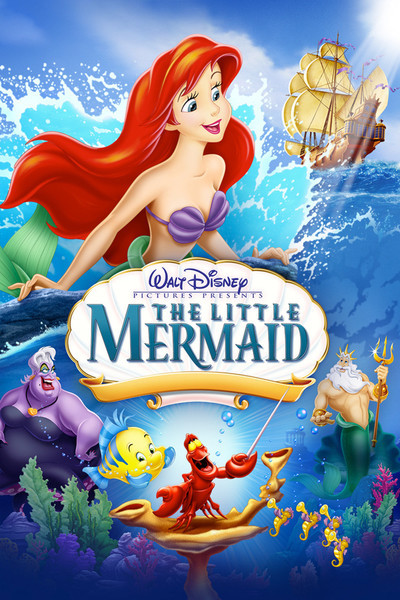
3. The Little Mermaid - So Clements and Musker directed their second Disney film, The Little Mermaid. It was also made great because Katzenberg followed his drive to make animations into Broadway musicals. That brought on Howard Ashman, who in addition to doing the lyrics for Alan Menken, and Ashman really brought the characters to life, giving direction on their personalities and details (the details, like giving Sebastian the Jamacian flair and musical style). He did that for The Little Mermaid (especially Sebastian and Ursula).

4. Beauty and the Beast - And then he did it again for Beauty and the Beast (especially suggesting the furniture comes alive, which is actually something Disney did a few times with the Sorcerer's Apprentice and Sword in the Stone). (Note that this detail of the furniture coming alive was vital, because they were lacking a reason why it was an animation up to that point.) Clements and Musker also helped provide some direction and supervision for that one (especially given their passion for fairy tales).
(The director of Beauty and the Beast, Gary Trousdale, was a writer for Oliver & Company, and he went on to write for Lion King and direct Hunchback of Notre Dame, Atlantis, and then he moved to Dreamworks where he wasn't given any more big shots.)

5. Aladdin - Next was Aladdin. Clements and Musker struck again as the writers and directors (it was another passion project of theirs; although Walt never touched it, Ub Iwerks did an animated movie of it on his own in 1934). Ashman had also helped get the ball rolling (he died of AIDS before it really took off in production), Menken came back in (after his success on Little Mermaid and Beauty & the Beast), and they brought on two amazing writers (Ted Elliott & Terry Rossio, who went on to write Shrek, the Pirates of the Caribbean movies, Zorro, and more). Aladdin was even a bigger hit.
Next they did something strange. Katzenberg wanted to tell the coming of age story of him having grown up in Africa. And so it somehow morphed into lions and the story of Hamlet (but with a happy ending). He brought on a new music talent, including a traditional movie composer, Hans Zimmer.
(Hans Zimmer did Cool Runnings, The Rock, Black Hawk Down, MI2, Gladiator, Pearl Harbor, The Pirates movies, The Ring, Batman Begins, Dark Knight, Simpsons Movie, and Sherlock Holmes; and Katzenberg brought Hans to DreamWorks with him, which is why Hans didn't do more Disney animations, and Hans worked on almost every single DreamWorks animation, including the better ones, Antz, Prince of Egypt, Shark Tale, Madagascar, and Kung-Fu Panda.)
6. The Lion King - So Katzenberg brought on different talent other than the successful Menken, Clements, and Musker, and The Lion King was even more successful than the rest (though the influence and momentum of Clements and Ashman continued on in this film). Then Katzenberg got fired (next time, if your boss wants you to invite him to your creative meetings, you should invite him). So he went off and formed DreamWorks with his pals Steven Spielberg and David Geffen. And he eventually sued Disney to get the hundreds of millions that they owed him off his contract.
Bottom line: If Eisner found a way to collaborate with Katzenberg and keep him, then Shrek, Kung-Fu Panda, and Madagascar would all be Disney films. Maybe not, but Katzenberg would have brought Disney over to successful 3D animations a good decade before Lassetter ended up doing it (and I still think Dreamworks animations are more successful than Lassetter's Disney animations are, but obviously not more successful than Lassetter's Pixar animations).
Anway, other than Katzenberg and Zimmer, here are other reasons why Lion King did so well...
(1) One of the directors was Roger Allers (he was a writer on Oliver & Company, Little Mermaid, Beauty & the Beast, Aladdin, and went on to write the original story of Emperor's New Groove, direct The Little Match Girl, and then left Disney to direct Open Season).
(2) The other director was Rob Minkoff (he had directed the two Roger Rabbit shorts, and he went on to direct Stuart Little 1 & 2, Haunted Mansion, and Forbidden Kingdom).
(3) Brenda Chapman supervised the story (she wrote for Beauty & the Beast, Hunchback, Fantasia 2000, Chicken Run, Cars, Katzenberg tapped her to become the first woman animation director with Prince of Egypt, and now Lasseter has brought her over to Pixar as the writer of Brave/Bear and the Bow and Cars).
(4) Gary Trousdale contributed to the story (mentioned him already, he directed Beauty & the Beast, Hunchback, and Atlantis).
(5) Chris Sanders contributed to the story and production (he wrote for Beauty & the Beast, Aladdin, Mulan, and directed Lilo & Stitch; he left Disney after a fall-out with Lasseter on Bolt, and now he's at DreamWorks, directing How to Train Your Dragon and The Croods, a caveman animation).
So, what happened after Lion King, that resulted in a mess of films?
Well...
(1) Katzenberg had pushed out Eisner, so Eisner couldn't help anymore (but his help was growing less useful because he was stretching himself thin).
(2) Disney struck gold four times in a row (Little Mermaid, Beauty & the Beast, Aladdin, and Lion King), but they were running out of ideas and running their imaginations thin. They were itching to try new things, and unfortunately, most of those spelled disaster.
(3) Katzenberg was fired, and while Katzenberg had a few animated disasters of his own over at DreamWorks (Road to El Dorado, Spirit, and Sinbad), we know he would have steered Disney well because he knew when to quit and try 3D animations like Pixar (Disney still hadn't figured out how to do that right until Tangled).
(4) Clements wasn't into it anymore. His Hercules movie was cute, but it didn't capture the audience and Treasure Planet was a bad idea (mommies own the movie tickets; we all should know that by now). He came back (Lasseter's wishes) with Princess and the Frog, which ends up demonic, too scary, and mostly about a couple of frogs running (not the most entertaining concept in the world).
(5) Roy Jr. was dealing with corporate board politics, and he was concentrating too much on Fantasia 2000 (as a monument to Walt).
(6) Ashman was dead. Ashman had a huge impact, especially on the first three films, The Little Mermaid, Beauty and the Beast, and Aladdin.
(7) Chris Sanders stopped writing for the films. He wrote for Beauty & the Beast, Aladdin, and Lion King. Then the next Disney film he wrote for was Mulan (which was a great film). Then the next one was Lilo & Stitch (which he directed). After that he fell out with Lassetter over Bolt and went to DreamWorks to direct How to Train Your Dragon (an amazing film). So Sanders slowed down his writing contributions and then left altogether.
(8) Basically Disney let the successful directors (who stuck around) have more freedom to do what they wanted instead of making sure the projects were best for Disney like they did for the first four films (Little Mermaid, Beauty & the Beast, Aladdin, and Lion King). So then Gary Trousdale got to do Hunchback of Notre Dame and Atlantis. Ron Clements did Hercules and Treasure Planet. Disney brought on the great Cats Don't Dance director from WB to do Emperor's New Groove and Chicken Little (again films that make sense for the director and not for Disney, although Disney probably still made profit on them; they just weren't huge box-office hits, and they strayed from the successful Disney formulas).
After Lion King...
What resulted was a mess...
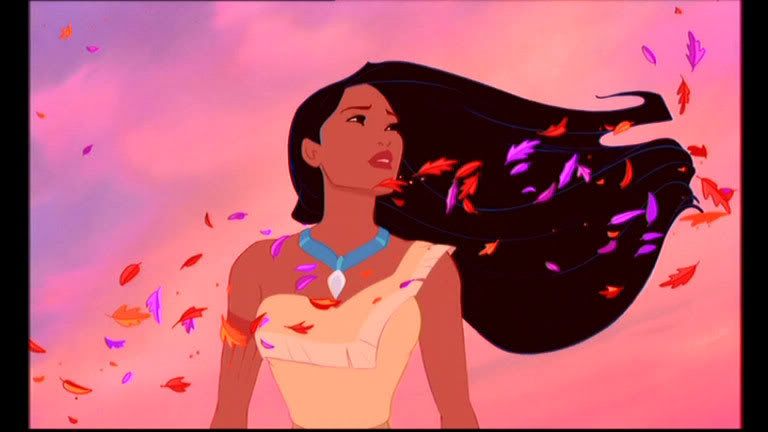
(1) Pocahontas (A little preachy, but not bad. Director Mike Gabriel had done Rescuers Down Under. Both directors worked on Fantasia 2000 and then stopped directing. Now they both focuses on animation and visual design at Disney. ).

(2) Hunchback of Notre Dame (Gary Trousdale and Kirk Wise follow up Beauty and the Beast with a religious tragedy written to stir political conventions in adults; WHY??? This is proof that the directors started doing whatever they wanted, not what was best for Disney. Trousdale and Wise went on to direct Atlantis. After Atalantis, Trousdale then went to DreamWorks where he stopped directing films. Wise then worked on other Disney projects like Spirited Away and DisneyNature's Oceans.)

(3) Hercules (Clements and Musker had a great concept, taken from Walt's Fantasia, but they turned into a light song and dance routine that lacked the substance and character of Little Mermaid and Aladdin. Again the directors were doing what they wanted, and not what was best for Disney.)
Next I'm going to skip Mulan (I liked this one; I'll come back to it) and Tarzan (also liked it, so I'll mention it later).

(4) Fantasia 2000 (Roy Jr's folly; it is enjoyable, but it is very inconsistent, no thanks to Eisner, who insisted on including Pomp & Circumstance. Mostly it's more of a monument to Roy's memory of his uncle Walt than it was a good idea for Disney. Even the original Fantasia lost a ton of money at first, which is why Walt abandoned his sequel ideas.)

(5) Dinosaur (Beautiful and enjoyable, but the story and humor were too weak to make back the huge expenses. For this film, they teamed up Ralph Zondag, the director of Universal/Spielberg's We're Back, and Eric Leighton, the supervising animator of Tim Burton's Nightmare Before Christmas and James and the Giant Peach. Then quickly split and stopped directing; Ralph went on to work on story and art for Spielberg and Disney animations, and Eric supervised the animation of King Kong, Charlotte's Web, Coraline, and Legend of Guardians: Owls.)
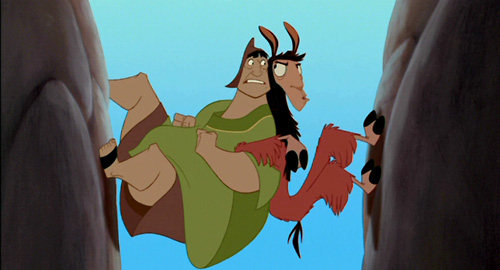
(6) The Emperor's New Groove (Hilarious and I love the director Mark Dindall, who also did Cats Don't Dance for WB and Chicken Little for Disney; I hope the movie made money back through audiences realizing how funny it is and buying DVDs and through the spinoff TV show. However, an animated comedy without romance or adventure doesn't appeal to mommies, who own the family movie ticket. Also, this started out as an animation about Incans and was originally intended to be a Disney fairy tale about The Emperor's New Clothes, but Mark pretty much muddled it down into a comedy that mommies wouldn't pay for. I still loved it though, but it's obvious why it wasn't a hit.)

(7) Atlantis the Lost Empire (A boys' cartoon that belongs on TV. Because it was good and had a decent dose of romance, mommies took their kids, but it didn't have enough Disney qualities to have made it a hit. This was Gary Trousdale's follow up to Hunchback. He was obviously doing what he wanted and not what was best for Disney.)

(8) Lilo & Stitch (A modest commercial success, but I certainly wouldn't want it to ever be compared to Pinnochio or Peter Pan, so it goes on this list of messes. Chris Sanders first directed film, and he later left Disney to DreamWorks to direct the great How to Train a Dragon, and currently The Croods.)

(9) Treasure Planet (Finally Clements gets his sci-fi action movie (he also pitched this one with Little Mermaid back in the late 80s), and it's a huge flop. What mommy wants to see this? If her son wants to see it, she'll let him wait for the DVD, which is what all the mommies did.)

(10) Brother Bear (Okay, turning a human into an animal and going on an adveture might seem like a good idea, but... scratch that, it seems like a horrible idea. Plus it is now 2003, which means these 2D animations are competing with Finding Nemo and Shrek 2. If you stay with 2D, you need more firepower than a bear flick. New directors Aaron Blaise and Robert Walker animated for Disney for over a decade before this film, but they left the animation business behind after working on this film. )

(11) Home on the Range (And let's follow up the bears with some cows. Great. Somebody needs a medal of honor or something for horrible decision-making. Also, this was 2004, so this film was competing with Incredibles, Shrek 2, Polar Express, and Shark Tale. They teamed up John Sanford, a Disney writer who mostly stopped working after this one, with Will Finn, a long-time Disney animator who directed Road to El Dorado. So Will was also out of directing after two unsuccessful films. Will has gone on to storyboard for various animations, mostly for DreamWorks.)

(12) Chicken Little (A fun little film, 3D, and a modest success. However, I couldn't help but feel that they drew the story out, stretching it thin, which you pretty much have to do with a short story like this, and it seemed a little too weird and offbeat for a Disney movie. That's probably the director Mark Dindall, the Emperor's New Groove guy, trying to make it a little more adventurous and less like his straight comedies. This also seemed to be the last film from the director, which is a crying shame).

(13) Meet the Robinsons (Enjoyable, and Lasseter helped save it, but it wasn't a successful movie, probably because it's about boy humans who time travel. Again, probably not what a mom wants to see. On the plus side, the director, Stephen J. Anderson, went with Lasseter's changes and he's being rewarded by directing the upcoming Winnie the Pooh film).

(14) Bolt (Enjoyable and a modest success. It's not my favorite, because I just see it as The Incredible Journey / Homeward Bound with a moviestar complex. However, Lasseter knocked out Chris Sanders to make it good, and he brought on Chris Williams, the director of the great Glago's Guest short, and Byron Howard, who also directed Rapunzel).
(15) The Princess and the Frog (The mess continues. So Clements and Musker are back and they're trying to appeal to girls again, but they end up giving us demons that are too scary for kids, killing a main character, which should be done early so that we can heal or not at all, and the majority of the picture is about two frogs running, and it features former humans that became frogs, like we didn't learn not to do that with Brother Bear. So it was enjoyable, except for the demons and death, and it actually had a story and good music. But the flaws were enough to keep it from being a success).
(16) Tangled (Wow. We did a full, long review on Tangled here. In short, the film has great characters, story, visuals, and is a ton of fun. However, it never breaths, it only has one amazing musical number, it doesn't use the animation medium very well (to build characters), and you only get to know one of the great characters (Rapunzel) as much as you want to, leaving you wanting more backstory and history of another 5 or so great characters. It's a step in the right direction, but it doesn't look like it's a box office success along the lines of Pixar and the Disney films of the early 90s). It wasn't exactly a mess though. It's an amazing film.
=====================
I think there were two successes during the "mess" that were successful in the box office and worthy films of the Disney name (sorry but I can't really claim Atlantis, Brother Bear, Lilo & Stitch, Chicken Little, and Bolt to be worthy of being in the same category as Lady & the Tramp, Dumbo, or Jungle Book, even if they were modest hits). Here are those two films that were worthy during those 15 or so years:
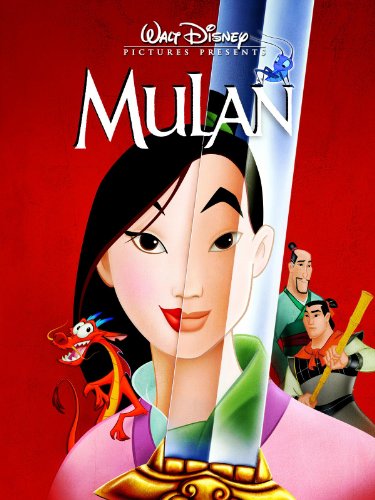
(1) Mulan (It was a success in the box office, and it was a worthy musical. It has a heartening story and memorable characters (Eddie Murphy brought Mushu to life before he turned to the competition and became Donkey). The two directors on this film both split and left Disney. One's working on a Paul Bunyan film and one is working on Arthur Christmas for Sony and Aardman.)

(2) Tarzan (Although it wasn't a musical, they still injected Disney music. The movie was a hit, and I think it is definitely worthy to be a Disney film in any collection. It was also a great idea because Walt Disney was considering it. The author, Edgar Rice Burroughs, approached Walt and asked him to make it into an animated film (Disney was mulling it over and trying to figure out how to make it). The director of Tarzan was Chris Buck, who left Disney to direct the inventive Surf's Up, and now he's coming back to direct Disney's The Snow Queen (Lasseter scores again), which is said to be a 2D animation, though I have trouble believing that Chris would go from 2D to 3D and then back to 2D. The other Tarzan director, Kevin Lima, went on to direct live-action Disney films like 102 Dalmations and Enchanted.)

(3) Tangled (Again, check out our review here: http://theanimationempire.blogspot.com/2010/12/tangled-theanimationempire-movie-review.html. Tangled/Rapunzel is from Bolt director, Byron Howard and Nathan Greno, the director of the Super Rhino short for Bolt.
Next up are Winnie the Pooh (from Meet the Robinsons' director, Stephen J. Anderson), King of the Elves (from Bolt director, Chris Williams), Reboot Ralph (about a videogame character), and hopefully still the Snow Queen fairy tale (from Tarzan and Surf's Up director, Chris Buck). So Lasseter has Disney continuing to tap fairy tales, more recent adventurous books, and even making use of the characters that Disney owns (like Winnie the Pooh or the great direct-to-video Tinker Bell series). So let's hope it works.
I'm hoping King of the Elves makes it happen (since Meet the Robinsons, Bolt, Princess and the Frog, and Tangled didn't get Disney up to DreamWorks and Pixar, and I doubt Whinnie the Pooh in 2D can do it.
In the meantime, we're confident that Lassetter and Andrew Stanton will keep giving us Pixar hits (Andrew is the director of Finding Nemo, Toy Story, and Wall-E and is now running Pixar in Lassetter's absence). Their next films are Toy Story 3 (from Toy Story 2, Monsters Inc, and Finding Nemo co-director, Lee Unkrich), Cars 2 (John Lassetter teams with Brad Lewis, the producer of Antz & Ratatouille), Brave (a Scottish princess story, written by Brenda Chapman who directed Prince of Egypt, and directed by Mark Andrews, the director of Pixar shorts One Man Band and Violet), and Monster's Inc. 2 (from Pete Doctor, who gave us Monster's Inc. and Up).
But that brings us back to the question... who made Disney so successful? To fairly answer the question, we also need to look at what Eisner did right...
===============================
What Eisner did right

(1) He raised the theme park ticket prices. Sort of a "duh" thing, but it greatly increased the Disney revenue.
(2) He pushed merchandise hard (in Disney stores and retail stores).
(3) He helped Disney get the "singles and doubles" live-action film hits it needed to keep the studios profitable. This was mostly just in the mid to late 80s. Then he was pushed out by Katzenberg and spread himself too thin to do this well.
(4) He started the Disney Stores. Well, he promoted an executive who did it, but still.
(5) He got the Disney home video machine going. They started releasing all the classics, and they've never stopped. It became a huge boom of cash for the company (much more valuable than re-releasing the films in theaters). This business is still thriving today with DVDs, BlueRay, and Disney Download.
(6) He got the Internet strategy going (overshot it actually, trying to compete with Yahoo), but it was good because it set up the framework for the current games they do online (Pixie Hollow, Pirates, Club Penguin, etc.).
(7) He expanded the theme parks. He kind of overshot this too, bringing about the EuroDisney failure (French people don't like you, Mickey Mouse) and Disney's California Adventure (I've got a great idea; let's make a new theme park and not use our characters). But still, it brought the company's income up.
(8) He acquired ABC and later Fox Family. It seemed like a good idea, and it was good for several reasons, but it just thinned out Eisner's focus and gave Disney a huge problem to deal with (and he got a bad deal on Fox Family). The good point of this is that it made Disney larger, harder to buy out, and gave them more synergy to work with (like Power Rangers on Disney channels and in Disney parks). (But later they sold back Power Rangers; why???)
(9) He put Disney into the hotel business, building hotels around the theme parks, and those soon became huge profit centers.
======================
It's all about John
All that said, it really wasn't Eisner who made Disney successful. Think about it. All the value at Disney is spurred on by the animated films. And sure Brukheimer brought Disney some huge live-action hits (such as the Pirates movies), and Disney found a few good live-action family movies (The Santa Clause, Mighty Ducks, 101 Dalmations, Flubber, etc.), but all those did was counter the costs of their live action flops. It was really the animations of the early 90s that brought Disney back as a key player (and then the Pixar movies from 96 on).
The animations provided the content that fueled the merchandise, Disney Stores, theme parks, home videos, the Internet, and even TV. Walt knew this. The animations always came first. That's why Bob Iger bought Pixar and put Lasseter in charge (Bob Iger took over as Disney CEO in 2005). I just hope Lasseter can do it, because he hasn't had a Disney animation hit yet (but to be fair, Robinsons, Bolt, and Tangled were salvage projects, and so Princess and the Frog was his first real attempt; and he's making great progress in improving the Disney parks, saving Disney's California Adventure, and revolutionizing Tinker Bell with the direct-to-video series). Update: Looks like Tangled, Wreck-It Ralph, and Frozen are his first three hits, but it took some time (Meet the Robinsons, Bolt, Princess and the Frog, & Winnie the Pooh).
John Lasseter:
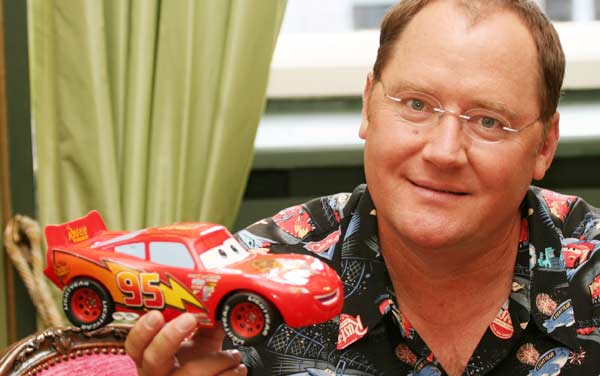
So since we know Lasseter can save Disney's direct-to-video efforts, its theme parks, and can make Pixar into what it currently is, I think he'll get the Disney animated films right too (it's just taking him a lot longer than I thought it would).
===================================
Once again, let's go back to the question I keep dodging...
Who made Disney successful in the late 80s?

(1) Ron Clements: Ron gets the top spot for this one. It was Ron's idea to go back to fairy tales. He pushed the fairy tales hard, and it resonated through Little Mermaid, Beauty & the Beast, and Aladdin. Specifically, he and Musker wrote and directed the Great Mouse Detective (which Katzenberg and Eisner forced to be worse than it could have been by lowering the animation quality via the budget and time resourced to it), The Little Mermaid, and Aladdin. (Side note that Katzenberg was finally willing to make quality animations starting with "Oliver and Company", because that was a project he was passionate about... and because it was successful, they continued the quality after that.) Ron also helped push the vision for Beauty and the Beast to align with his idea of going back to romantic fairy tales (Walt's top two successes were Snow White and Cinderella). I think the formula even spilled out onto The Lion King a little, even if that film was an original idea by Katzenberg (based on Hamlet and Kimba). Ron's failures were that he started doing what he wanted to do (making Hercules too light, making Treasure Planet for boys, and pulling Princess and the Frog too far from the original story and making it too dark; also he let Randy Newman do the music). He lost the checks and balances that he had earlier on (those people left Disney, got fired by Eisner, like Katzenberg and Roy Disney, or died as in Ashman's case below). Special mention goes to Ron's directing partner, John Musker.

(2) Howard Ashman: Ashman was the lyricist in Little Mermaid, Beauty & the Beast, and Aladdin, and he was the executive producer of The Little Mermaid and "Beauty and the Beast" (because he died before Aladdin made it to full production). I give Howard the #2 spot. Katzenberg had the idea of bringing in the talent of Broadway producers, but it was Howard who played the Walt Disney role, making the characters come alive in Little Mermaid, Beauty in the Beast, and the preproduction of Aladdin. For example, it was Ashman who said that Sebastian could be a Jamaican Rastafarian crab (which changed all the music that Sebastian directed) rather than Clarence, the English butler crab. And he based Ursula on a full-figured Broadway diva. Plus I think his magic spilled out a little and influenced The Lion King. Howard is the only one on this list without any failures or mistakes. His only mistake is that he got AIDS, and he died (a tragedy; reminds me of Walt dying from smoking and getting lung cancer; also happened too early in his career).

(3) Roy Disney: Although Roy wasn't the most most creative person, he had some good ideas for the details. And most importantly, he was the only executive who knew that the future of Disney was in the animated films. He always knew that. And so he pressed it hard. He saved Disney and animation. Roy's faults were that he wasn't creative enough to keep the Disney animated hits coming, and he invested too much in the flop, Fantasia 2000, in an attempt to honor his memory of Walt Disney, his uncle. Roy has since passed on.
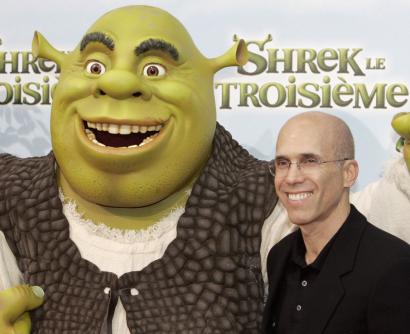
(4) Jeffrey Katzenberg: So why isn't Katzenberg #1 on this list? He would probably put himself there. Why? Because it was Katzenberg who championed and who took control of Oliver & Company (a modest success) and The Lion King (Disney's biggest animation blockbuster). The Lion King was his idea, based on his own story. He made the decision for Disney to make Toy Story with Pixar, and he told John Lasseter to watch some buddy comedies in order to breathe life into the Toy Story... story. Also, Katzenberg championed the idea that Disney should be making musicals, and so they should go to Broadway to get talent.
However, I don't think he should be #1. For starters, he and Eisner wanted to close down the animation studio (he's lucky to be on here after that heresy). Second, the best idea for Disney animations was to return to the adventure and romance stories and fairy tales. Those weren't his ideas either. Those came from Ron Clements. Katzenberg originally cut the costs and pushed on making The Great Mouse Detective lower quality, and he originally vetoed The Little Mermaid (he said it was too much like the Tom Hanks comedy, Splash). Also, he put Pocahontas and the others in production, so the hits would have stopped for a little while anyway (even if he hadn't left). He also fought with Roy and most of the animators merely tolerated him (they didn't like him; there's a huge collection of drawings they made to make fun of him). They called him a tyrant. He admitted it (even outright told Lasseter he was a tyrant, but after he said that he'd add that he's always right). It's a little strange that he thinks he's always right (he is often though), especially because he wanted to stop animations and cut the quality of them. And he didn't think they should make The Little Mermaid. That doesn't sound like "always" to me.
That said, if Eisner had kept Katzenberg on board, Disney would have had a few failures, but Katzenberg would have steered Disney Animation toward the Pixar formula 12 years earlier, which he used (combining with his knowledge of live-action films) to make movies like Shrek, Madagascar, Kung-Fu Panda, and How to Train a Dragon. (Note that we first see a hint of Disney Animation moving toward the Pixar formula with "Wreck-It Ralph".) Katzenberg's first CG film, Antz, was in 1998. Shrek was in 2001. Although Katzenberg was #4 in bringing Disney to where it is today, he would have kept it alive had he stayed. (So I believe Katzenberg would be #1 or #2 on the current list if he never left Disney. However, in Katzenberg's defense, Eisner fired Katzenberg. So it's really Eisner's fault that DreamWorks exists. It wouldn't exist if Eisner would have found a way to promote and keep Katzenberg instead of firing him. Imagine, Shrek would be a Disney film!)
So that's it. It was a team effort, but the top players were Clements, Ashman, Roy, and Katzenberg. Originally, I had thought that it was Katzenberg's idea to go back to Disney's fairy tale and romantic stories. But it was Clements who had that idea (and why the first thing Lasseter did when he took over as Disney Chief Creative Officer was to find Clements and ask him to do another fairy tale, which became Princess and the Frog... Lasseter knew that Clements was the fairy tales guru), and Ashman actually channeled Walt Disney the best out of any of the crew. Katzenberg was also involved, but the best parts came from Clements and Ashman.
Plus Roy saved the Disney company several times. First, by bringing on Michael Eisner and pushing out his brother in law, Ron Miller (Walt Disney's son in law, who Walt thought would take over, but Ron wasn't as creative and lacked the degree of business sense of Eisner). Second, by taking control of the animation department so that Eisner and Katzenberg couldn't shut it down (because Roy got Eisner in power, Eisner offered Roy anything he wanted, and Roy asked to take over animation). And third, and most recently, Roy saved Disney by getting Eisner off the board, which brought on Robert Iger as the new Disney CEO in 2005.
Robert Iger:

Then, everybody gasped in amazement as Iger revealed his true self: competent. That's right, they all thought he was Eisner's stooge and therefore would act just like Eisner (Eisner overpayed for Internet assets, tried to compete with Yahoo online and failed, funded the EuroDisney disaster where they made a real castle and built a lot of hotels that weren't being used, bought a couple of sports teams, built the Disney California Adventure failure, overpaid for Fox Family Channel, fired Katzenberg, fired Roy Disney and Stanley Gold, was about to lose the contract with Pixar, and then to cut costs and make up for his mistakes, he pulled back on costumed characters in the parks and pulled back on park maintenance, resulting in a death on Thunder Mountain)... so a lot of people feared another Eisner since Bob Iger was Eisner's right-hand man. However, Iger was befriending Eisner for his own good (and because he's a nice guy and a hard worker); Iger got the top spot, and he's made golden decisions since then:
(1) Bought Pixar in 2006. Put Lasseter in charge of creativity. Put Steve Jobs on the Disney board.
(2) Brought Oswald the Lucky Rabbit back to Disney in 2006. He promised Walt's daughter, Diane Disney Miller that he'd do this. Walt had thought he owned Oswald, and felt like he got Oswald stolen from him when Mintz stole his Oswald contract in 1928. The first real use of Oswald has been to co-star in the Epic Mickey games.
(3) Bought Marvel in 2009. Holy cow. When's the first Marvel theme park opening? (Disney is starting to inject Marvel cartoons into the Disney XD channel now. Marvel is integrated with Disney merchandise sales now. Disney Animation is working on Big Hero 6, a Marvel super hero team that's based in Japan.)
(4) Bought Lucas enterprises in 2012: Star Wars, Indiana Jones, Industrial Light and Magic, Skywalker Sound, LucasArts games... the whole deal. This is a little ironic, since Pixar was originally a small branch of Lucas' enterprises. But it makes sense because the parks have helped keep the Star Wars and Indiana Jones brands alive. Apparently George was getting sick of fanboys complaining about his new vision for Star Wars, and he wanted to cash out when Obama was starting his second term (and putting the clamps down on big corporations). And here was Bob Iger asking to buy Star Wars. First movie under Disney is expected in 2015.
So sorry to Eisner and Iger, but you guys didn't make the list for who made Disney successful in the late 80s and early 90s. Sure, Eisner, you hired Katzenberg and helped with some creative discussions in the early 80s (and good early business decisions for the company), but that also led to Oliver & Company and Rescuers Down Under. Plus you wanted to shut down the animation studio, which is pretty much heresy. Sure, you did all those great things I listed (Disney home videos, Disney theme parks, Disney merchandise, and Disney live-action movies), but those are mostly common sense and business sense. They aren't the creativity that revitalized Disney (it was the animated fairy tales and Pixar that did that). Plus, as I already mentioned earlier, the animations fueled the content that made the synergy, merchandise, home videos, and theme parks so successful. When the animated films aren't great, the company's bottom line isn't as great. So you don't make the list, even though you cast yourself to take Walt's place on The Wonderful World of Disney (Roy Jr. turned it down, but he wouldn't have turned it down if he'd known that the alternative was Eisner doing it). (Also, Eisner, you did crazy things like bought the Angels, started the Mighty Ducks, spent a ton of money on the EuroDisney fiasco, bought the Fox Family Channel for 3 times what it was worth, wasted money on online endeavors, fired the best people, etc.)
That also brings me to one last thought. Since Eisner and his stooges brought the company down to another crash, who is it that is making Disney successful now?
Well, because Disney owns Pixar, they are using the Pixar movies like crazy. But I still want to see Disney animated films become successful before this is truly a "done" list below. (And Disney's Tangled is a step in that direction.)
But here we go...
==============================
Who is making Disney successful currently?

(1) John Lasseter: You can't argue with that. He's had 10 animated Pixar films, and all 10 are hits and all did better than the most successful post-Lion King movies that Disney has had. Pixar basically picked up in 95 where Lion King left off in 94. When Iger had Disney buy Pixar, Iger had John come on board as the Chief Creative Officer. Although he has yet to give Disney an animated hit (Tangled is currently dropping too quickly), he already revitalized the low-quality direct-to-video market with the Tinker Bell films (and now the Plane films), he has been adding some sweet Pixar rides into the theme parks (might as well be Pixar, since those are the biggest Disney hits since Lion King), and he's revitalized Disney's California Adventure, including a new Cars Land, Wonderful World of Color, elecTRONic, Toy Story Midway Mania, and he's also giving Goofy and The Little Mermaid their own rides (so he's not selfishly sticking to Pixar characters only).
Special thanks to Katzenberg here though. Jeffrey Katzenberg (when he ran the Disney movies) tried to get Lasseter to leave Pixar and make a Disney animation. But Lasseter gave Katzenberg a counter-proposal (for Disney to work with Pixar). Katzenberg finally settled for Disney to co-produce Toy Story with Pixar instead. And it was Katzenberg who helped Lasseter learn what story-telling was like, and he told Lasseter that he was making a buddy film with Toy Story (and handed him 48 Hours and other buddy comedies to study).

(2) Robert Iger: The man who helped put ABC on top, and then Eisner bought ABC (he was the president of ABC, poised to become the CEO of ABC, and came into the new company and had to "start over" and work his way up to become the Disney President/COO and then CEO), and he struggled to get ABC back on top. Finally he did it briefly with Who Wants to Be a Millionaire, which was long enough to get the coveted Disney President and COO positions. He followed Eisner loyally, and he was rewarded by it when Eisner named him the successor. As everybody was on the edge of their seats to see what Iger did next, he suddenly showed common sense. He bought Pixar, Oswald the Lucky Rabbit, Marvel, and Star Wars. He's concentrated on acquiring characters rather than new businesses that were a departure for Disney. He put Lasseter in creative control. In short, he made key strategic moves that saved the Disney company. Robert Iger is the John Adams of Disney (there's an American history lesson/metaphor for you) - he's pulling all the strings, elevating the right people, and making the big decisions, but everyone else gets the credit (like Washington, Jefferson, Franklin, and Hamilton -- tying back to the American history reference), in this case meaning Lassetter and Bruckheimer get more of the credit, since their names are in the credits (literally).

(3) Roy Disney: Once again, Roy makes the list (the only one to make it twice). He noticed that Eisner wasn't successful, and he began the long battle against Eisner while his friends (like Stanley Gold) also got chewed up in the process. Finally he won, yet again, this time dethroning Eisner (who he put there in the first place). This was vital, because without Roy doing this, Pixar would have left Disney and the company would have continued to languish creatively. Iger then gave Roy a job back and put him back on the board. Roy died a few years later in 2009 (at age 79). So even though Roy's dead now, he's still one of the biggest key contributors to Disney's success. Without him, we might not have Lasseter, Iger, and others in control.

(4) Jerry Bruckheimer: Jerry started doing action movies for Disney's Touchstone label, and he's never stopped. He's revitalized Disney's live action movie business with Pirates of the Caribbean and National Treasure. So some kudos are deserved.
Disney has been wanting to get in the boy merchandise business for awhile (they already cornered the girls merchandise with Disney Princesses and Disney Fairies). Bruckheimer contributed Pirates of the Caribbean, Lasseter contributed Cars (which allowed Disney to compete with Hot Wheels and Tonka, two very difficult markets to get into), and Iger contributed by acquiring Marvel and Star Wars. Now Disney has a firm handle on boy merchandise with Pirates of the Caribbean, Cars, Marvel, and Star Wars.
So I just have the four of them. I didn't put Steve Jobs here, because all he did was bought Pixar from George Lucas and not try to stop Lasseter from doing animations (which is more than Lucas did; Lucas tried to stop Lasseter, convinced it was a hardware and software company). Jobs also originally thought Pixar was a hardware and software company, but then Lasseter showed Jobs that he had bought an entertainment company. So while that is admirable of Jobs to purchase Pixar, Jobs certainly didn't have the vision that he was turning Disney around in the future (and Lasseter led the creative treck at the studio). (Plus Jobs is doing stupid things at Disney like he sometimes does at Apple; for example, Jobs had Disney pull out of McDonalds deals because McD's isn't healthy enough. Grrrr.)
Oh, and the "runner ups" here include the guys that I call the "Pixar crew." Pixar has kept Disney alive from 1995 to present despite Michael Eisner, and Lasseter couldn't have done it without his support structure of creative talent. John Lasseter's greatest strength is finding and empowering talent (but he hasn't been able to pull that off as well in Disney animation yet... he's getting closer). However, at Pixar, Lasseter nailed it (very similar to Walt was able to do). Lasseter's Pixar crew includes Andrew Stanton (currently running Pixar under Lasseter; Stanton won two Academy Awards for directing Finding Nemo and Wall-E, he's been involved in all the early hits, and Finding Nemo is the #2 most successful Pixar film; Stanton left to direct John Carter, but he's back to do Finding Nemo 2), Brad Bird (also won two Academy Awards for directing The Incredibles and Ratatouille; left to direct MI4, but he might return for Incredibles 2), Pete Docter (directed Monster's Inc. and Up, won an Academy Award for Up, co-wrote many of the classics; UP was the #3 most successful Pixar film in the box office, and he's currently directing an "Inside the Mind" Pixar film), and the latest whiz kid, Lee Unkrich (he co-directed Toy Story 2, Monster's Inc., and Finding Nemo, and now he directed Toy Story 3, which is the #1 animation of all time; he won an Academy Award for directing Toy Story 3).
John Lasseter has two Academy Awards... Best Short for Tin Toy and a special achievement award for Toy Story. The first Pixar generation of directors were John Lasseter, Andrew Stanton, and Brad Bird (two Academy Awards each). The new crew of achievers are Pete Docter and Lee Unkrich (one Academy Award each). Plus new Pixar directors are getting shots (Dan Scanlon's Monsters University & Bob Peterson's The Good Dinosaur), and past directors are following up (Pete Docter's Inside the Mind, Andrew Stanton's Finding Nemo 2, Lee Unkrich's Dia de Los Muertos). Also Toy Story 4 and Incredibles 2 are said to be in production, but we're not sure who the directors are yet.
Time will tell what happens next. Disney obviously needs some hit animations from their own studio, not just from Pixar (Tangled was the first hit, and Winnie the Pooh was a flop; it's looking like Wreck-It Ralph might be another hit; and Frozen looks promising). So maybe that list isn't complete quite yet, but there's a good chance that Lasseter will be the one who orchestrates that come back.
- The Emperor


 />





 Posts


